

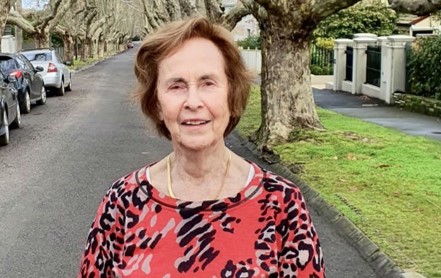
When Helen McCausland experienced two vertebral fractures within weeks of each other, she expected the hardest part would be recovering from her injuries.
What Helen did not expect was how difficult it would be to navigate the healthcare system – an experience that revealed gaps in care and opportunities to improve the patient journey.
Despite her background as an experienced physiotherapist, Helen discovered there was little coordinated guidance to help patients recover after a vertebral fracture. There were specialists to see, scans to undergo and treatments to consider, but no clear pathway bringing it all together.
As a healthcare professional, “I thought things could have been done much better,” Helen said.
Her experience ignited an idea that she hopes will improve care for thousands of Australians every year.
Through a considered gift to St Vincent’s, Helen is supporting the development of multidisciplinary clinical guidelines for vertebral fractures, bringing together experts from emergency medicine, endocrinology, neurosurgery, physiotherapy, occupational therapy, radiology, pain medicine and nursing to create a more consistent, evidence- based approach to care.
In 2023, there were more than 35,000 vertebral fractures cases in Australia. Often referred to as “crush” fractures, these painful injuries are most commonly caused by osteoporosis, and with Australia’s ageing population, these are expected to become increasingly common.
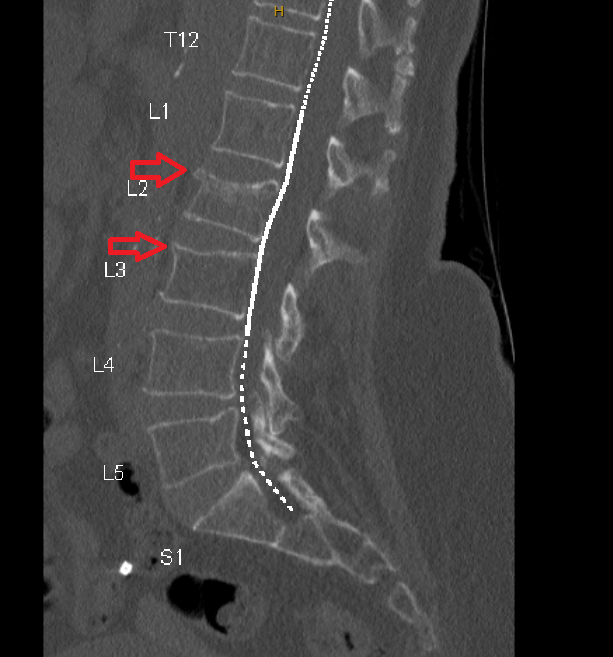
A deidentified CT scan showing compression fractures of the L2 and L3 vertebrae, illustrating the type of vertebral fracture Helen experienced.
6.2 million Australians over the age of 50 have poor bone health – a number expected to rise as our population ages.
Yet the fracture itself is often only part of the story.
“A vertebral fracture is a bit like a first heart attack or stroke. Once someone has had one fragility fracture, they’re at much higher risk of having another,” said St Vincent’s Endocrinologist, Dr Alice Hong, who is project lead of the vertebral fracture management guideline development.
Rather than simply treating the immediate injury, the new guidelines will help ensure patients receive the right care from the right specialists at the right time, while also identifying and treating the underlying osteoporosis that may have caused the fracture in the first place.
“We’re not just treating the fracture they’ve come in with,” Dr Hong said. “We’re making sure they’re assessed and started on treatment to help prevent future fractures.”
For clinicians, the guidelines will provide a shared framework that helps identify which patients need specialist care, streamlines referrals and ensures opportunities to improve long-term bone health aren’t missed.
“You don’t want people to have to reinvent the wheel again and again,” she said. “If everyone is working together and sharing ideas, the patient benefits.”
Originally intending to leave a gift through her Will, Helen decided to bring her donation forward in her lifetime, so that she could help create change now.
“I just thought it would be good to get on with it,” Helen added.
Having begun her physiotherapy career at St Vincent’s in the 1960s, supporting the project at St Vincent’s felt like a natural choice.
Dr Hong said the team are incredibly grateful for the support, especially when healthcare funding is always under pressure.
“Support like Helen’s gives us the opportunity to improve patient care in ways we otherwise wouldn’t have the time or resources to do. Not only will we better manage people with vertebral fractures today, but we’ll also help prevent future fractures and improve quality of life for years to come,” Dr Hong said.


